
Battery Energy Storage
BESS units have been known to catch fire or even explode and need to be sited where the fire service can act and definitly not sited close to residential property.
BESS Overview
Battery Energy Storage Systems (BESS) are facilities that store electrical energy using rechargeable batteries, typically lithium-ion, to be released when needed. These systems can be used in modern power grids by balancing supply and demand, improving reliability, and supporting the integration of renewable energy sources such as solar and wind, which are intermittent by nature. The batteries are generally housed in shipping storage containers which can be spread across large areas of land depending on the capacity of the facility.
BESS facilities
work by charging the batteries during periods of low electricity demand or when renewable generation is high, and then discharging stored energy back to the grid during peak demand or outages. The system includes batteries, inverters (to convert between direct and alternating current), control systems, and safety mechanisms. The control system manages when and how energy is stored or released, optimizing efficiency and ensuring grid stability.
The benefits of BESS
are that they enable renewable energy integration by storing excess generation and providing power when renewable output is low. They enhance grid reliability by offering fast frequency response, voltage regulation, and backup power during blackouts. BESS can also reduce electricity costs by shifting energy use to off-peak times and minimising the need for expensive peaking power plants. In remote or off-grid areas, they support microgrids and energy independence.
However, BESS facilities do pose certain risks.
The most notable are fire and explosion hazards, particularly in lithium-ion systems, due to potential thermal runaway if batteries overheat or are damaged. Toxic gas emissions can occur during battery failures, posing health and environmental risks. Two such fires have already occurred in the UK in Liverpool in 2020 Essex in 2025. Thermal management of the facilities is required and BESS facilities use cooling systems like fans and transformers to prevent overheating. This noise created from the cooling systems can have harmful effects, including physical and psychological stress, disrupted sleep, and reduced concentration for nearby residents. Additionally, battery production and disposal involve mining and processing of rare materials like lithium and cobalt, which raise sustainability and ethical concerns. There is currently no specific BESS regulation in the UK to control where they can be located, how they are cooled, how much noise they can generate and what fire mitigants need to be in place.
Overall,
BESS facilities are a cornerstone of the transition to cleaner, more resilient energy systems but their deployment must prioritize safety, sustainability, and responsible lifecycle management
Is a BESS coming to a field near you?
As the gold rush for solar and wind farm planning applications around the Alverdiscott substation continues; prior to any national strategy to manage our energy network; in the blind pursuit of net zero here in England without any consideration of the costs to our energy bills, landscape or food security. A new flammable horror has entered the equation with BESS.
A BESS is a Battery Energy Storage System which enable energy to be stored and can balance the flow of energy. They are composed of thousands of lithium ion batteries, encased in storage units the size of a shipping container. Many of these “shipping containers” can be spread across acres of land. They stand on a concrete base and are usually accompanied by maintenance facilities including storage facilities for machinery, office blocks, car park for worker access etc.
As we have seen with a number of fires on the M5 in recent months – when similar batteries catch fire, the ensuing inferno cannot be put out, and has to burn through. There have already been 4 BESS fires elsewhere in the country, yet the planning for fire mitigation resides with the developer rather than the local fire authority – who will have to attempt to access fields, down our tiny Devon roads, with no water hydrants when they get there.
But the BESS developments are now rolling into both Torridge and North Devon District Council. The Bulworthy solar development has a detached BESS site within the parish of Westleigh in a field of open countryside (currently arable) and currently has no way of being connected to the solar panels over half a mile away. Obviously we all know what happens if we have a dry period, and there is a fire in the middle of a field, and this site is close to residential properties, as well as any chemicals released from a fire likely to be released into the waterways – which flow out onto our precious blue flag beaches.
The Webbery BESS has also just been submitted to Torridge planning dept, yet to be validated, and before any consultation meeting had taken place with the public. This particular development could be adjusted to lessen the impact to the surrounding properties, and their bee population – but to date this has fallen on death ears.
North Devon already contributes huge amounts of energy to the grid. We are seeing associated community funds in no way compensating for the loss of amenity and damage to our vital agricultural and tourism industries.
East Devon District Council have rejected numerous BESS applications. However, Torridge Council buckled on appeal for the Stoneworthy project at Pyworthy despite huge local opposition. Please ensure your voice is heard regarding the current projects within the local planning system before our beautiful Northern Devon landscape is blighted by more of these monumental fire hazards in a flawed plan, by this appalling government to rush to reach net zero
PRESS RELEASE
Just beyond the Copse on the right, with a stream running below will be a 49.9MW industrial BESS development.
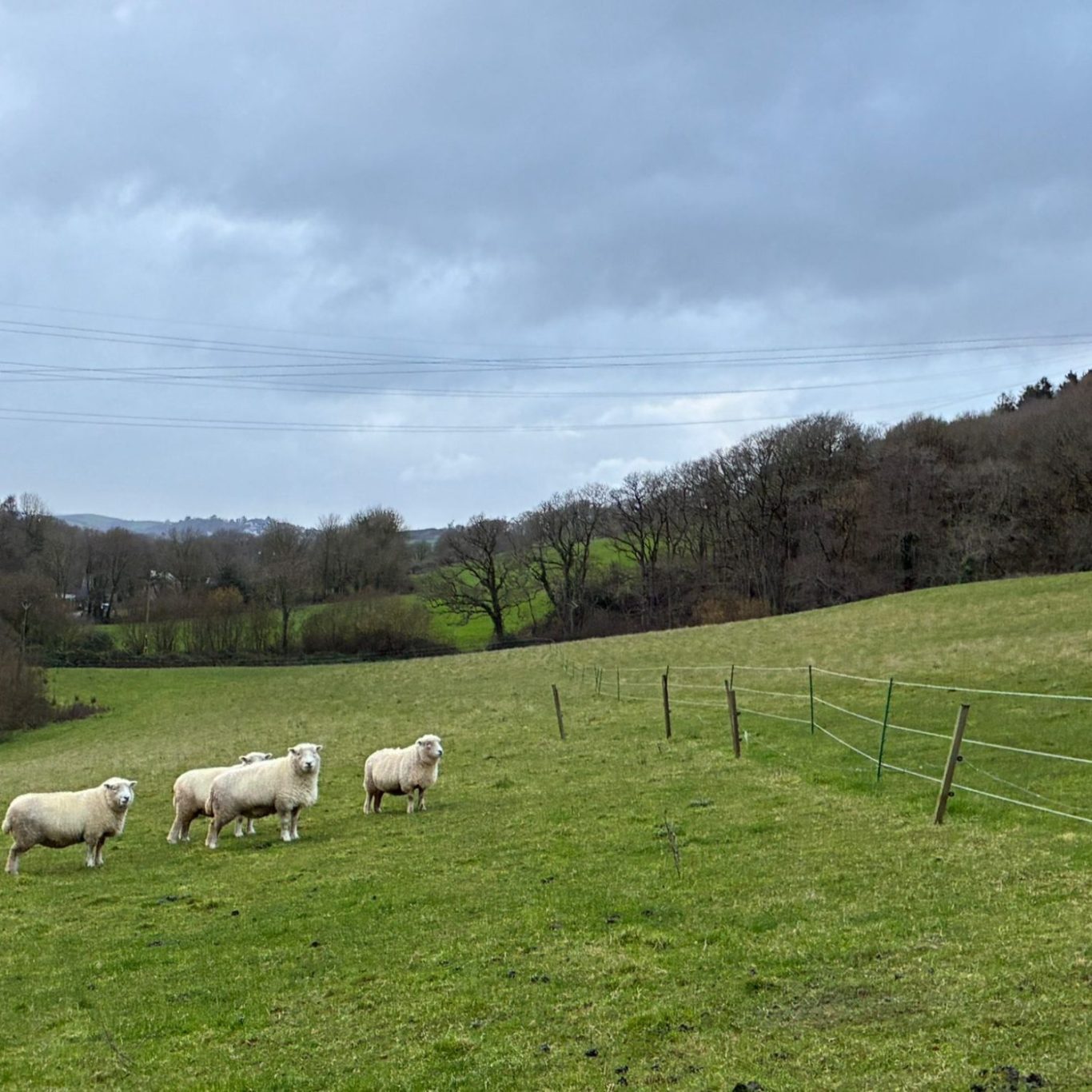
An objection to the BESS at the Bulworthy Solar development.
17th October 2025
Planning Department
Lynton House
Commercial Road
Barnstaple
EX31 1DG
Torridge District Council
Planning Policy
Riverbank House
Bideford
EX39 2QG
Dear Sir/Madam
Re: Planning Application 80402 (North Devon)
Planning Application 1/0470/2025/FULM (Torridge)
Bulworthy Solar Farm and BESS at Bulworthy Farm North Devon
Further to my letter (29th August 2025) of objection to the above planning application, I have looked further into the matter of the siting of the BESS and solar panels in the western part of the proposal in Westleigh parish. Our property is the closest residence to the proposed site and we have numerous concerns regarding safety and noise which will affect the amenity of all the properties in the hamlet of Ashridge and those closest in Horwood itself.
Firstly, it was a huge omission on the part of the developer and North Devon Council to not inform Westleigh Parish Council of this proposal and I have detailed my understanding and concerns below:
BESS (Battery Energy Storage Systems) facilities enable energy to be stored and can balance the flow of energy throughout the system particularly at times of high demand. They are composed of thousands of lithium ion batteries encased in storage units the size of a shipping container. Many of these “shipping containers” can be spread across acres of land. They stand on a concrete base and are usually accompanied by maintenance facilities including storage facilities for machinery, office blocks, car park for worker access etc.
The BESS proposed in the Bulworthy solar development application will stand, with solar panels, in a field of open countryside (currently arable) in the parish of Westleigh. It will be separated from the eastern section of panels by just over ½ mile and there is currently nothing in the application which identifies how the two sections are to be joined. This is obviously a major short coming in the application.
LOCATION AND CONCERNS
The proposed BESS site (the western portion of the application) lies in a field which slopes gently to the south on the outskirts of Horwood village.
The siting of the unit and associated complex lies just behind Blackdown Wood on top of a spring which feeds into the stream below. This stream borders the wood and runs west as a tributary to the River Torridge.
The slope continues down through pastoral fields of herbal ley to the hamlet of Ashridge which lies at the valley bottom. Little Ashridge is the closest property to the development at c. 250metres away on the other side of the wood. Residents of Ashridge are particularly worried regarding the safety issues which surround BESS units – the fire risk at such close quarters and the potential for contamination of streams and ground water as several of the properties use well water.
There is currently no legislation or guidance for the siting of BESS units close to residential property and this is an oversight which needs to be addressed.
1. FIRE HAZARD - composed of lithium batteries, there is a strong chance of fire breaking out through thermal runaway particularly if the unit(s) overheat in a summer such as the one we’ve just had. Situated next to a woodland there is a serious danger of fire spreading downhill across open pasture to Ashridge combined with the release of toxic gases into the air. The recent M5 fires involving electric vehicles being transported on a lorry and batteries in waste don’t give confidence that lithium batteries en masse are safe and stable.
There is some contradiction over fire control of BESS units – in general terms, the Fire Service say a water hydrant is needed, but the nearest hydrant is in West Ashridge and Fire Engines will be unable to get beyond this point because of a very narrow stone bridge. The site itself will be inaccessible from the hydrant. The developer’s own report says that water is of little use and that other suppressants are necessary to quell a lithium battery fire. There has been no identification or provision made for these undoubtedly toxic chemicals to be stored on site.
Noventum has not identified which BESS unit they will be installing. They are waiting for planning permission before doing so. The Devon and Somerset Fire and Rescue Service have not commented on the proposal itself as they have little detail to respond to.
2.. CONTAMINATION of soil and water - Thousands of tons of concrete for the base for unit(s) will be required. This will involve numerous HGV movements, destruction of arable land and the concomitant toxic effects of leakage and overspill from building processes and the BESS itself.into ground water and the stream below. This is a tributary to the River Torridge and subsequently the Taw/Torridge SSSI.
A number of Ashridge residents use wells fed from the ground water and springs of the hill above them and are concerned at toxic leakage from the BESS site.
It is unlikely the agricultural land covered by this proposal will be usable after 40 years and the clean-up operation will be worse than that currently at Yelland.
3. HGV MOVEMENT AND LOGISTICS OF CONSTRUCTION How are the hardcore, concrete and unit(s) to be delivered? Hundreds of HGVs (all petrol driven) will need to bring everything in along small rural lanes. BESS units cannot be dismantled and have to arrive in one piece. They are the size of shipping containers. There are the obvious safety issues associated with this approach as the lanes are used by local drivers, deliveries, cyclists, horse-riders, dog walkers etc.
There is also the unacknowledged consequence that many vehicles will start to use other, smaller lanes as rat-runs eg the single pot holed track through Ashridge. This happened when the Link Road was recently blocked and traffic diverted to the Old Barnstaple Road. The lanes through Ashridge and up to Webbery and Horwood were inundated with numerous angry drivers trying to avoid the chaos.
4. NOISE - Noise pollution is currently considered the second most significant environmental cause of illness, after air pollution (Peris, 2020). A recent study by the Chartered Institute for Environmental Health found the number of complaints saying noise pollution had a “major impact” on respondents' rose by more than 50% in the one year (CIEH, 2022). It has been found that exposure to uncontollable noise can result in high blood pressure, heart disease, sleep disturbance, and annoyance (Peris, 2020). These problems affect all age groups, but people at either end of the age spectrum (i.e.children and the elderly) seem to be the most vulnerable. Noise also impacts animals, who suffer similar physiological effects. Alongside this, animals also rely on sound for navigation, foraging, mating, and avoiding predation. Increasing noise pollution in their habitats interferes with their natural activities and chances of survival.
The valley through Ashridge and Bulworthy is steep sided; noise is readily amplified and travels long distances, reverberating throughout the valley. The noise of construction with lorry movements, beeping vehicles, pile drivers etc will be tremendous and will echo back and forth along the valley for six days a week. The Devon Landscape Strategy has noted the tranquillity of this area as part of its landscape character and this is a defining character we all recognise and appreciate.
Noise generated from the site will not finish after construction. There will be continual lorry and car movements close to the BESS as a small settlement is also being proposed here with car park, offices and maintenance facililites which will all impact the surrounding area in an industrial way for years to come.
BESS units themselves are not quiet. Continually humming at between 40 – 60 HZ, they will be heard overnight as well as a background hum in the day. This low frequency travels long distances and has been recognised by WHO as a contributor to stress and anxiety in people exposed to it. The cooling fans will also come on at regular intervals and this will add to the industrial noises emanating from the site. Noventum has not acknowledged that noise might be a problem either during construction or after and no noise/audio surveys have been undertaken or submitted with the application.
5. ENVIRONMENT and SUSTAINABILITY – lithium is a finite resource and its mining uses vast amounts of water with consequent contamination and soil degradation, to say nothing of conditions for workers in lithium mines. There are also problems with recycling in terms of cost – efficiency and safety. In 40 years’ time, how will all this be removed and recycled in a safe, environmentally friendly and efficient way? It is unlikely that the site can then be re-used for food production due to toxicity and compaction issues. Noventum have not submitted a restoration plan with the application.
As a beekeeper, I am aware of research that shows that electro-magnetic fields (EMFs) are detrimental not only to humans, but to honeybees and other species of Apidae, affecting their ability to navigate. BESS units will not only hum consistently but will increase the EMF values locally which could be devastating to local honeybee colonies (possibly leading to colony collapse disorder) and their wild relatives.
Noventum has not submitted full ecological surveys for the site or surrounding area. We know that protected species, along with many others, regularly visit the area and will be compromised by a development of this size and position particularly at the BESS site. This depletion and consequent relocation of biodiversity should not be waved aside as a consideration in the current rush to industrialise and reduce safety in the rural areas of North Devon which are ill-equipped to deal with it.
For more information please contact: Selaine Saxby 07801 427358; selainesaxby@hotmail.co.uk
https://www.bulworthysolarandbessactiongroup.co.uk/
https://www.bidefordbess.co.uk/