
It would also appear your locally elected MP Ian Roome has no objection to North Devon fields being destroyed and industrialised.
Click image to hear what Sir Geoffrey has to say about Bulworthy Soalar.
Letter from The Rt Hon Sir Geoffrey Cox KC MP
Member of Parliament for Torridge and Tavistock House of Commons, London SW1A 0AA
FAO Laura Davies Planning Officer
Torridge District Council Planning Department Riverbank House Bideford EX39 2QG
29 September 2025
Dear Ms Davies,
Re: Application No. 1/0470/2025/FULM - Bulworthy Farm Solar & Battery Storage
I am writing to formally express my strong objection to the above-mentioned planning application in my capacity as the Member of Parliament for Torridge and Tavistock. While I acknowledge that Members of Parliament do not have a direct role in the planning process, I feel compelled to voice my concerns given the potential adverse impact this project may have on my constituents and the inherent principles of local democracy.
This application lies significantly outside the boundaries defined by the adopted local plan, and its approval would represent a troubling disregard for the foundational tenets of localism that govern our planning framework. Communities must be able to trust that their voices, planning efforts, and elected representatives will be acknowledged rather than usurped by proposals of this nature. I have directly observed the overwhelming sentiment within the community regarding this issue.
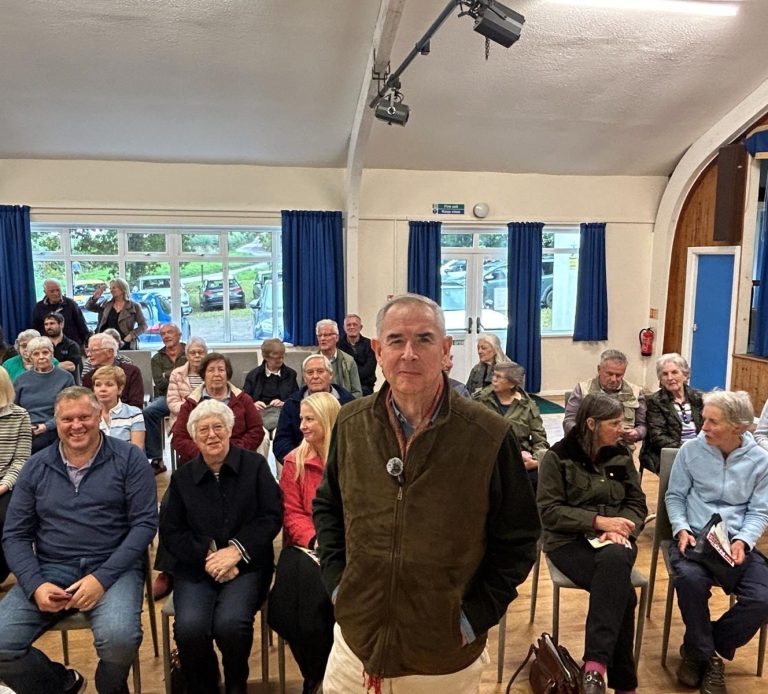
At a recent surgery held at Alverdiscott Community Hall on 19 September, I was met with a full assembly of residents, all of whom were resolutely opposed to the application. Such consensus is a rare occurrence and serves to underline the substantial concerns this proposal has evoked. Upon reviewing the relevant documents and the numerous representations made to me, I am unequivocally convinced that the proposed development would inflict significant and lasting harm. Encompassing nearly 300 acres, the scale of this project is grossly inappropriate for a rural and quiet landscape. Coupled with existing solar installations and visible wind turbines, it threatens to industrialise an extensive area of our countryside, detracting from its character and generating a cumulative impact that cannot be overlooked.
Moreover, the land in question possesses considerable agricultural value, with at least a quarter classified as best and most versatile, and nearly half designated as Grade 3B. In an era where food security is becoming increasingly critical, it is profoundly concerning that productive farmland would be compromised in this manner. Both national and local policies mandate the protection of such land; however, the applicant has failed to exhibit a sincere exploration of brownfield or less sensitive alternatives. Traffic and highway safety represent additional substantial issues. The narrow rural lanes surrounding the site are already ill-suited for heavy goods vehicles. Historical evidence from similar projects indicates that construction traffic can generate significant disruption and hazards.
Residents are rightly apprehensive that these issues will recur on an even larger scale in this instance. Ecological considerations must also be addressed, as proposed development poses risks to wildlife and habitats. The ecological assessments conducted are incomplete, and in certain respects, undertaken in conditions that call their reliability into question. Significant habitats, ancient woodlands, and vulnerable species are all at risk, yet the proposed mitigation measures fall short of being adequate. Furthermore, it must be noted that the proposal does not adequately consider residential amenity.
The anticipated noise from batteries, inverters, and substations is likely to surpass background levels, particularly during night-time hours, with direct implications for nearby residents. In a broader context, the application stands in stark contrast to both national and local planning policies. It fails to protect farmland, prioritise brownfield development, or demonstrate ecological net gain. Moreover, the information laid out by the applicant is lacking, with crucial details regarding battery technology, risk assessments, and grid connections remaining vague or altogether absent. Notably, the absence of a confirmed grid connection until at least 2026 raises genuine concerns that, should this development be approved, it may lead to irreversible damage to the landscape without fulfilling its intended purpose.
Finally, I am compelled to point out that the community engagement process has proven to be deficient. Consultation has been sporadic, with affected parishes being overlooked, and the proposed community benefit fund appears grossly disproportionate to the extent of the anticipated harm. In light of these multiple concerns, I contend that this application is speculative, poorly conceived, and fundamentally incompatible with the interests of the communities I represent. It poses an irreversible threat to our landscape, agricultural resources, and ecological integrity while providing no demonstrable benefits in return. I therefore respectfully urge the joint planning authority to reject this application.
Yours sincerely,
The Right Honourable Sir Geoffrey Cox KC Member of Parliament for Torridge and Tavistock
We are CPRE, the countryside charity. We want a thriving, beautiful countryside for everyone.
About
The Campaign to Protect Rural England (CPRE) is a national charity founded in 1926 and has become over the last 90 years the foremost champion of the English countryside. We have a National Office in London which sets out to influence national policy and to raise awareness nation-wide of the big issues affecting the countryside by mounting national campaigns. And some 40 or so County Branches around the country who concentrate on local issues.
Devon CPRE is an independent separate charity, registered charity number 1175228 and we focus on Devon – its countryside and green spaces.
Our aim remains to protect the Devon countryside in a way that underpins the local economy whilst maintaining all that is best in the balance between necessary development and a tranquil, productive and beautiful environment. We are the only independent, non-aligned, non political organisation working throughout the whole County to protect Devon’s countryside, green spaces and environment and we do this by getting involved with the planning process.
Outside our National Office, CPRE is run largely by volunteers who devote an inordinate amount of time and effort, not just to the mass of contentious planning applications that come their way, but to attending Public Inquiries and Appeals on behalf of the membership. The planning system has been changed dramatically by this present Government and we are seeing a tidal wave of proposals for development throughout the County, many proposals clearly being quite unrelated to the actual needs of the local community.
We need your help, both with practical assistance if you have some useful experience or expertise, or by becoming a member or donating to our funds to help the many causes we are championing at any one time. It is your countryside and we need all the help we can get. As an independent charity, Devon CPRE relies solely on memberships, donations and legacies. With more support we can do more to protect Devon’s countryside and green spaces.
Devon CPRE - objections to Bulworthy Solar Farm
to planning applications 80402 and 1/0470/2025/FULM
The Voice for Devon’s Countryside
www.cpredevon.org.uk
PO Box 26, Beaworthy, EX21 5XN Registered Charity No: 1175228
Tel: 01392 966737
North Devon District Council Reference: 80402
Torridge District Council Reference: 1/0470/2025/FULM
Proposed installation of ground mounted solar farm (49.9MW) & battery
energy storage system (BESS) & associated ancillary works
Bulworthy Farm Alverdiscott Bideford EX39 4PY
Devon CPRE
3rd September 2025
Devon CPRE objects to planning applications 80402 and 1/0470/2025/FULM.
The planning application contains many misleading, incorrect and unsupported
statements. It does not provide any references to the information used to provide any
claims made.
Electrical Energy Produced
The Design, Accessibility & Planning Appraisal (DAPA) provides details concerning the
proposal. Section 6.0 of the DAPA states that the purpose of the solar farm is to
“generate essential clean energy”. However, the DAPA does not state what the purpose
of the Battery Energy Storage System (BESS) is.
The DAPA does not provide the most important information concerning the BESS, namely
its storage capacity and how and when it would be used. Section 12.0 states that the
storage capacity is up to 49.99MW. This statement is wrong. 49.99MW is the BESS
power capacity - hence the units of MW. The storage capacity would be the maximum
amount of energy stored and would be given in units of MWh. BESS are very expensive
facilities and, depending on their usage, would need replacing several times during the 40
year life of the development. The BESS would add considerably to the cost of the
electricity produced by the solar farm.
The Executive Summary and Sections 11.0 and 12.0 of the DAPA state that the proposed
development would power the equivalent of up to approximately 24,000 UK households,
whereas Section 13.0 states that the proposed development would power the equivalent
of up to approximately 18,000 UK households. Which is supposed to be the claimed
number? This should be clarified. No information is given as to how the number is
calculated. Presumably it is dependent on the installed capacity, the claimed load or
capacity factor and the average UK household power consumption. The proposed
installed capacity is up to 49.9MW. Ofgem gives an average annual UK household
consumption of 2,700kWh. Statista gives an average solar load factor in the UK of
10.2%. This would result in the development producing enough electricity to power (49.9
x 0.102 x 24 x 365) / 2.7 = 16,500 households. The applicant would seem to be using
incorrect data and this should be clarified. Furthermore, as the solar panels age, their
performance is degraded (by up to 1% per year) so that the load factor would fall and the
number of households powered would also be reduced. The BESS would be a net
2consumer of the electricity produced by the solar panels due to round-trip losses incurred
during charging and discharging the batteries. This would further reduce the average
number of UK households powered by the proposed development.
The poor performance of the proposed solar farm is not surprising given that the World
Bank has shown that in terms of solar energy potential, the UK is the second worst
country in the world.
The average number of households powered by the proposed development is in fact a
meaningless statistic, because at night the proposed solar farm would power no
households and during winter, when demand is highest, it would power very few
households. Quite clearly the information provided in the application is incorrect as is the
description of the benefit in terms of the electricity produced by the proposed
development. The applicant should provide a report giving the details of how much
electrical energy the proposed development would supply to the grid and when it would be
provided so that the backup needed to provide grid balance can be determined.
The recent blackouts in Spain, Portugal and part of France have highlighted the danger to
the distribution and transmission networks of too much reliance on intermittent and
asynchronous generation, such as solar and BESS. The proposed development,
producing DC electricity, converted via inverters to AC for export to the grid, would
decrease the inertia of the grid when operating and would therefore increase the risk of
blackouts, which would be catastrophic. There have been several near-misses to local or
nationwide blackouts and this proposal could only make the situation worse, particularly
as there are many similar local facilities exporting to the 132kV grid.
Delivery of Electrical Energy
The developer has provided no evidence that the local 132kV grid and the 400kV
Alverdiscott substation have the capacity to accept electricity from the proposed
development. Has the developer obtained a connection offer from the National Grid?
Furthermore, it is evident that the eastern parcel of the proposed solar farm has no
connection to the western parcel and therefore cannot deliver electricity generated from
the solar panels to the proposed substation in the western parcel. The eastern parcel
should be removed from the planning application as it serves no purpose.
BESS Risk
The risk from a BESS is the probability of an initiating fault occurring combined with the
consequences of the fault. The major concern with a BESS is a fire and/or explosion.
The risk from BESS comes from faults leading to thermal runaway with the possibility of a
fire/explosion, the consequence being the release of toxic and explosive vapour clouds.
The probability of a fire is proportional to the number of individual battery cells and a
thermal runaway can be caused by many initiating events. The consequences could be a
fire or an explosion with the emission of toxic fumes and heavy metals affecting both local
residents and the local environment. Attempts to extinguish the fire or prevent its
spreading to adjacent modules could lead to fire water run-off and consequential
groundwater pollution.
The technology of Li-ion batteries has steadily improved over the past few years, so that
the probability of a fire at a BESS has fallen. However, so far in 2025 two BESS fires
have occurred in the UK (See EPRI ‘BESS Failure Incident Database’). The potential
consequences of a fire remain severe and the risk thus remains high.
In the UK there are no regulations and no standards for a BESS. This is confirmed in the
Outline Battery Safety Management Plan (OBSMP). Regulations are statutory, i.e.
enforceable by law. Standards change over time and are not enforceable. The Health &
Safety Executive does not regulate BESS. The Department for Energy Security and Net
Zero (DESNZ) provides guidance in ‘Health and Safety Guidance for Grid Scale Electrical
Energy Storage Systems’. March 2024. This guidance states that “Planning applications
and decisions should always be taken with a complete assessment of risks and impacts.”
The appellant has performed no risk or impact assessment. Guidance is also
provided by the National Fire Chiefs Council (NFCC). It has stated that it ‘recognises that
BESS pose specific hazards in the event of fire that are still not fully understood or
researched’. The Devon and Somerset Fire & Rescue Service can only give guidance to
developers and local planning authorities, and cannot enforce recommendations given in
the guidance. The OBSMP shows that the applicant has not performed a risk
assessment.
The location of the BESS is such that it poses an unacceptably high risk to local
residents and the environment.
Emissions saved
The DAPA makes numerous references to the need to reduce greenhouse gas (GHG)
emissions to meet various government targets, but completely fails to provide any
information as to by how much, if any, the proposed development would reduce such
emissions.
With regard to the GHG emissions savings, it is noted that the government has major
concerns in this area. It states in the Overarching National Policy Statement for Energy
(EN-1) dated April 2025 that:
All proposals for energy infrastructure projects should include a GHG assessment
as part of their ES. This should include:
- A whole life GHG assessment showing construction, operational and decommissioning GHG impacts, including impacts from change of land use.
- Measurement of embodied GHG impact from the construction stage.
A GHG assessment has not been undertaken. It is likely that, taking into account the
mining and refining of materials used in the manufacture of the solar panels, batteries and
other infrastructure, the transport, assembly, maintenance, decommissioning and back-up
of the proposed development, that there will be little, if any GHG emissions savings.
There may thus be no benefits from the proposal.
Farmland & Loss of Best & Most Versatile Land
The proposed 111.5ha (279acres) site is massive and is typical Devon farmland which,
together with the local climate, produces the finest quality beef and dairy products in the
world.
Section 12.0 of the DAPA shows that 25.5% of the site is grade 3a, 48% is grade 3b and
24.3% is grade 4. This land is ideal for growing grass and other feed crops for sheep,
beef and dairy production. The proposal affects 27.7ha of Grade 3a Best and Most
Versatile (BMV) land. Natural England states: “The development would result in the
temporary loss of BMV land and may not be in line with planning guidance which
encourages solar farms to be located on previously developed or non-agricultural land.”
There is therefore conflict with Policy ST01 and Policy ST03 of the North Devon Local
Plan (2018), which promote the safeguarding of productive land and prioritises
development on previously developed sites.
The North Devon Local Plan, the National Planning Policy Framework (NPPF) 2024, and
National Policy Statements EN-1 and EN-3 all support the preferential use of Previously
Developed Land (PDL) for solar development, especially over agricultural land. The
Environmental Statement references analysis of previously developed land. So, in line
with EN-3 which encourages justification for agricultural land use, are the LPA going to
require evidence of a site search for PDL alternatives, if not already provided?
The applicant makes many claims that agricultural activities would include sheep grazing.
However, observation of numerous solar farms in Devon has shown that sheep grazing is
impractical and is little used. In fact the use of herbicides is the preferred method of
vegetation control under solar panels.
The applicant also makes the claim that following 40 years and decommissioning of the
solar farm, the quality of the land would be improved. This is not correct. The strips of
land between the strings of solar panels would have been compacted due to use of
vehicles for solar panel cleaning and maintenance. Furthermore, water runoff from the
panels and pollution from the panels would damage the soil.
The proposed site is valuable farmland for food production and should not be used
for very inefficient electricity production.
The proposed development would lead to a considerable loss of food production and
would therefore have a considerable negative impact on food security. The loss of food
production would considerably outweigh the small gain in energy production.
Landscape
Devon CPRE are concerned that key landscape related issues raised in the
Pre-Application Response ENQ/0583/2023 (North Devon) and 1/0870/2023/SCRHID
EIA Screening Opinion (Torridge) have been missed or insufficiently addressed in the
submitted Landscape and Visual Impact Assessment (LVIA) for this proposal.
The LVIA partially responds but falls short of fully addressing the scope and depth of the
issues identified, especially around cumulative impact, elevated landform, and public
receptor visibility. For example:
The LVIA does not appear to meet the council’s expectation for a robust cumulative
landscape analysis, especially given the proximity to other large-scale solar schemes. The
LVIA acknowledges cumulative impact (Section 2.6.21), but fails to map or quantify
cumulative visibility.
The LVIA does not reflect the council’s clear recommendation to avoid visually prominent
elevated parcels, nor does it convincingly show how mitigation would reduce skyline
intrusion.
The LVIA does not fully respond to the council’s advice to assess all significant public
receptors, especially elevated viewpoints with wide visibility. It includes 13 representative
viewpoints but omits several key locations (e.g. Codden Hill, Webbery Cross). Some
areas are mentioned in passing but lack detailed visual analysis.
The LVIA understates the sensitivity of LCT 3A and does not fully justify how a 100+
hectare scheme aligns with the strategy to protect tranquillity and rural identity.
The response from Natural England supports our concerns that the LVIA lacks quantitative
or visual evidence to support claims that mitigation will reduce adverse effects, especially
from sensitive viewpoints. Stating: “The LVIA does not provide sufficient information to
assess the potential impacts on the special qualities of the National Landscape.”
This highlights conflict with Policy ST09 and Policy DM08A, which require that
development respects the character and setting of designated landscapes and avoids
adverse visual impacts.
Insufficient information
Both Natural England and the Historic Environment Team have highlighted inadequacies
in the assessments provided.
Natural England highlighting, amongst other things:
“The presence of ancient woodland and a veteran tree on or adjacent to the site requires
careful consideration and appropriate buffer zones.”.
“There is no assessment of the potential impacts on protected species, and the proposed
fencing and lighting may affect wildlife movement and habitat connectivity.”
“The application does not clearly demonstrate how biodiversity net gain will be achieved or
monitored.”
This is inconsistent with Policy DM08 and Policy ST14, of the North Devon and Torridge
Local Plan (2018) both of which require that development avoids harm to protected
species and maintains ecological networks. Section 15 of the National Planning Policy
Framework (2024) is also applicable.
The Historic Environment Team state:
The Heritage Statement submitted “is not sufficient to enable an understanding of the
significance of the heritage assets… or of the impact of the proposed development.”
Due to “known potential for survival and unknown significance of any below ground
archaeological deposits,” the Historic Environment Team objects to the application.
Without further information, they “recommend the refusal of the application,”.
The proposal conflicts with Policy DM07 of the North Devon and Torridge Local Plan
(2018) and paragraphs 207 and 208 of the National Planning Policy Framework (2024).
Benefits do not outweigh harms under the terms of the NPPF
NPPF paragraph 11 states that permission should be granted unless
any adverse impacts of doing so would significantly and demonstrably outweigh the
benefits, when assessed against the policies in this Framework taken as a whole
NPPF paragraph 168 states that:
When determining planning applications for all forms of renewable and low carbon energy
developments and their associated infrastructure, local planning authorities should:
not require applicants to demonstrate the overall need for renewable or low carbon
energy, and give significant weight to the benefits associated with renewable and low
carbon energy generation and the proposal’s contribution to a net zero future;
According to the Renewable Energy Planning Database (Jan 2025) and NSIPs registered
up to March 2025, more than 55GW of ground-mounted solar capacity has been applied
for (and the applications accepted), has been consented, is under construction or is
already operational in England. This represents 117% of the Net Zero target capacity for
2030 – not including any existing or planned rooftop solar or any further applications
accepted in the last six months.
If more than 117% of the Net Zero target has been obtained or is in the process of being
obtained, the ‘need’ for this application cannot be said to demonstrably outweigh the
cumulative harms to the landscape, amenity and economy of the parish that a 7% total
solar land-take would represent.
Solar Panel Manufacturer
The government has made its position clear on the use of slave and forced labour in the
solar panel supply train (see: Great British Energy to lead the field in ethical supply chains
- GOV.UK). If the council is minded to approve the planning application, then a condition
must be imposed which states that before installation of the solar panels commences,
information must be provided to the councils, and approved by the councils,
demonstrating that the solar panel supply chain is free of forced and slave labour
Conclusions
The benefits of the proposed solar farm have been exaggerated and many of the harms
ignored. In reality, there may be no benefits to outweigh the many harms outlined above.
Given the scale of the proposal, the sensitivity of the landscape, and the outstanding
concerns/responses from statutory consultees, the application should be refused.
A detailed response from Devon & Somerset Fire Service

Dear Catherine,
Please find attached a detailed response from Devon & Somerset Fire Service regarding your concerns about the battery storage system for the solar farm application.
Councillor Coombes and I will use this information in our questions to the planning officer when considering our representations to the planning committee.
Kind regards,
Frank
Frank Biederman
Caseworker to Ian Roome MP (North Devon)
frank.biederman@parliament.uk
(+44) 01271 410470
Thank you for your email. I hope this reply provides further detail to accompany the narrative provided in previous correspondence. Given its detail, I’ve structed this reply to hopefully address each point whilst avoiding duplication of information.
Any formal fire risk assessment conducted for the Bulworthy site including the ability of the Fire Service to access the site promptly.
DSFRS will have involvement in assessing fire risk relating to the above site however the responsibility for assessing and managing fire risk ultimately lies with the applicant / operator. The applicant / operator should have suitable plans in place throughout planning, operation and decommissioning stages to assess and manage fire risk.
These plans should be provided to the local planning department. These plans will typically include an Outline Battery Management Plan (planning stage), leading to a Battery Management Plan which covers both risk management (preventing fire and fire growth) and emergency response plan (managing a fire). This plan should cover from construction through to decommissioning. DSFRS will support local planning departments to assess the suitability of these plans, benchmarking them to recognised industry guidance (NFCC, FM Global, NFPA).
The above guidance, alongside input from Highways will help DSFRS advise local planning teams if Fire Service Access is suitable. The minimum benchmark DSFRS typically advises is as per Section B5 of Approved Document B, however, typically DSFRS advises 2 separate points of access. If approved, DSFRS will liaise with site operators to gather Site Specific Risk Information (SSRI) and potentially develop a tactical plan.
DSFRS has obtained a copy of the most recent Outline Battery Management Plan (OBMP) and can confirm that fire risk is currently being given appropriate consideration. The OBMP is typical in that it broadly outlines proposed safety features but exact products, specifications etc are normally procured if permission is granted. Proposed safety features include:
- 2 points of FS Access, both complying with ADB
- No Buildings within 25m
- A commitment to future DSFRS Liaison for risk and emergency plans
- 24/7 monitoring with automated shut down
- Detection and Suppression
- Compliance with recognised safety standards
- Water supply as per NFCC Guidance (240,000l)
Mitigation measures and contingency plans in place to manage fire spread and protect local properties, including thatched properties, particularly in dry weather.
To prevent fire spread, each battery bank is commonly housed within a fire resisting container. This safety feature should be tested and attract recognised accreditation. This is typically an American accreditation (UL testing method). The above should, in theory, prevent fire spread to properties if combined with other aspects of the NFCC guidance such as the advised 25m minimum distance (from battery to nearest property).
Protecting properties will formulate part of a tactical plan which would be developed if the site is used as per the planning application (becomes live). This plan would inform general tactics and include using national operational guidance and procedures for this type of incident. The incident would be managed by an incident commander who will ultimately decide which approach is best based on the individual circumstances of the time. Any such plan would be developed in liaison with the Environment Agency.
Procedures to prevent or manage environmental contamination, such as the risk of toxic runoff into local watercourses in the event of a fire.
Each site should have suitable environmental protection measures in place. These often include systems such as bunded areas to contain and manage water runoff. The Site Operator should have an emergency plan and post incident recovery plan in place to prevent environmental contamination and remove water, including water from firefighting operations.
Input on assessing the suitability of environmental safety measures will typically come from the Department of Environment, Food and Rural Affairs. At any incident, DSFRS has equipment and staff trained to manage water runoff. Their use, alongside the above tactical approach, typically involves DSFRS working in partnership with and under advice from the Environment Agency.